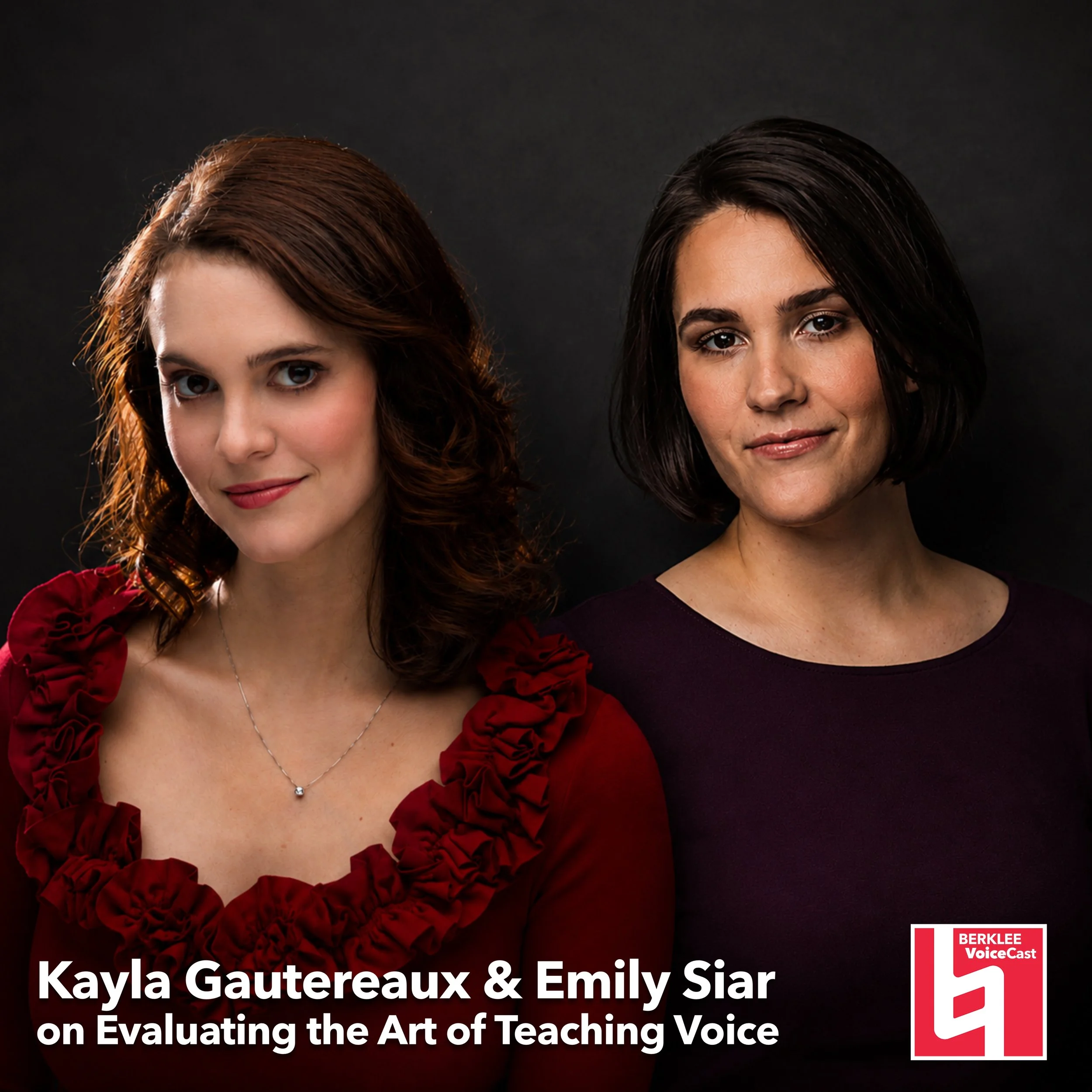
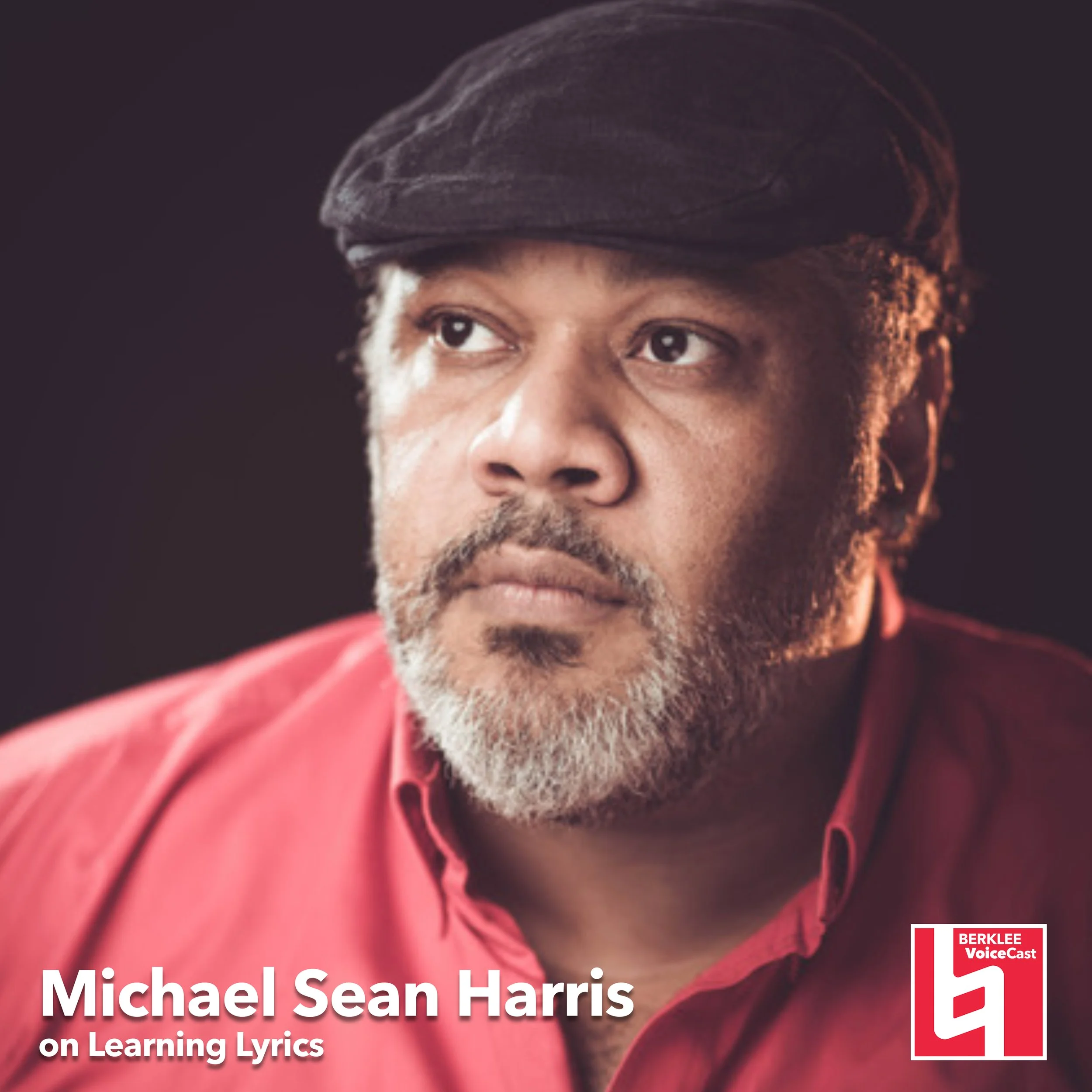
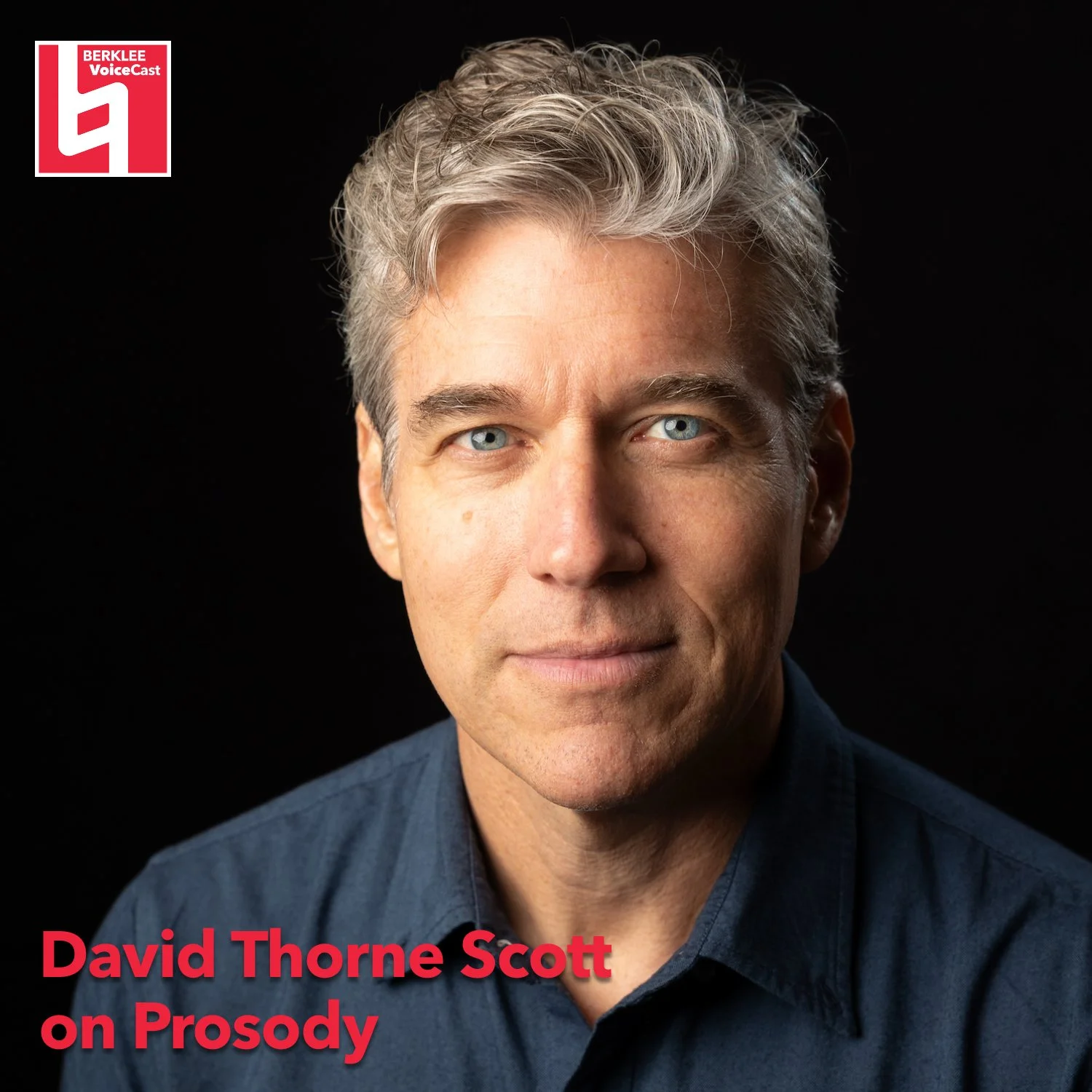
Rebecca Shrimpton on the Mind-Body-Voice Connection by Charlie Christenson

Episode Description

In this episode of the Berklee VoiceCast, host Charlie Christenson is joined by vocalist and educator Rebecca Shrimpton for a thoughtful exploration of the mind-body-voice connection. Drawing from her work as both a jazz vocalist and classical mezzo soprano, Rebecca shares how physical awareness, emotional state, and mental focus all shape the way singers experience and produce sound.

The conversation centers on how singers can move beyond purely technical approaches to embrace a more integrated, holistic understanding of the voice. Rebecca discusses how her own artistic journey led her to this work, and how she brings these ideas into the studio through practical techniques that help students develop consistency, freedom, and expressive depth.

Together, they explore how this connection shifts across styles—from jazz improvisation to classical repertoire—and why developing body awareness is essential for sustainable, versatile singing. Rebecca also addresses common misconceptions students have about vocal control and offers accessible ways to begin exploring these ideas in daily practice.

Credits

Produced and Hosted by Charlie Christenson
Music by Charlie Christenson

Guest Bio

Rebecca Shrimpton, acclaimed for her rare melding of a highly eclectic approach with a sumptuous and agile voice, is an assistant professor of voice at Berklee College of Music. She is a vocalist for Boston's 19-piece Jazz Composers Alliance Orchestra, with whom she has recorded eight CDs, including Why Do You Ride?, named to DownBeat Magazine's best of 2015 list. She also is a vocalist for OddSong, whose debut recording, Jailhouse Doc with Holes in Her Socks, was on Cadence Magazine's top 10 list for 2016. Shrimpton has performed with Norm Zocher's Electric Strings Band, the progressive rock band David Zoffer Differential, and was a guest artist with the ensemble Tapestry.

Shrimpton received international praise in 2005 for her solo CD, Madman's Moon. Her 2009 release, Requited, featured songs by best-selling novelist Anita Diamant (The Red Tent), pianist Bert Seager, and a brilliant band, featuring Rick DiMuzio (tenor saxophone), Jorge Roeder (bass), and Richie Barshay (drums).

Shrimpton, who composes and arranges for her jazz ensembles, recently expanded her writing to the theater. She has been music director for three productions by the Cape Ann Shakespeare Troupe, composing original scores, including eight songs using Shakespeare's lyrics from The Tempest. Her current project is a musical adaptation of A Midsummer Night's Dream.

She has performed at Cornelia Street Cafe and Somethin' Jazz Club in New York, New York; Regattabar, House of Blues, Ryles Jazz Club, the Beehive, Jordan Hall, and Berklee Performance Center in Boston, Massachusetts; and the exquisite Shalin Liu Performance Center in Rockport, Massachusetts. She also was featured on two PBS/NPR concert broadcasts and recordings, performing with singer/actor Theodore Bikel.

Shrimpton has taught voice for nearly 20 years, including at New England Conservatory Preparatory, Longy School of Music, and the Massachusetts Institute of Technology.

Links from This Episode

Berklee College of Music: berklee.edu
Berklee Voice Department: college.berklee.edu/voice
Berklee Voice Instagram: instagram.com/berklee.voice/
Charlie Christenson: charliechristenson.com

Rebecca Shrimpton Website: https://rebeccashrimpton.com
Social Media: Facebook | LinkedIn

Further Reading: We Are What We Listen To by Patricia Caicedo
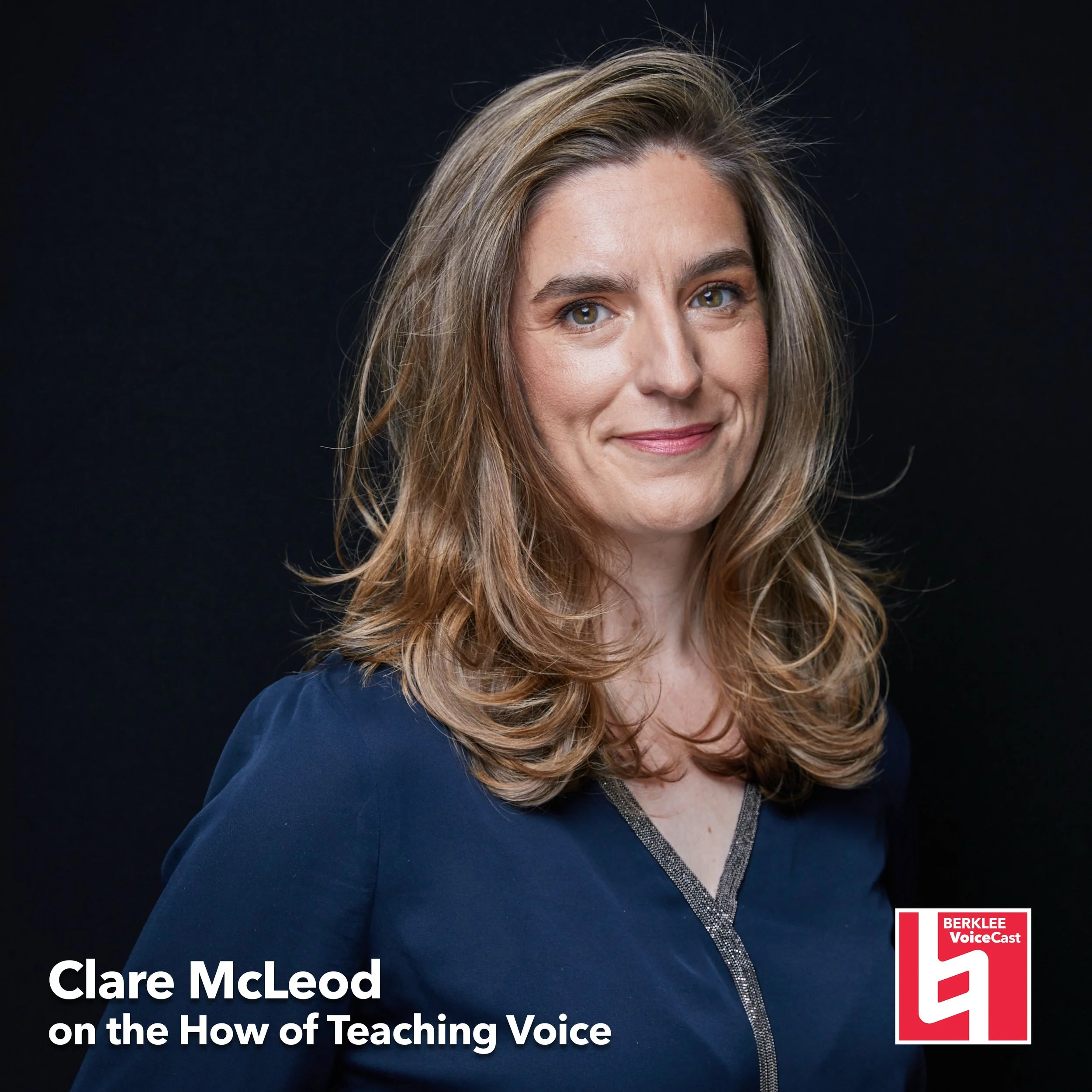
David Thorne Scott on Prosody by Charlie Christenson

In this episode of the Berklee VoiceCast, host Charlie Christenson sits down with vocalist, songwriter, and educator David Thorne Scott for a deep dive into the art of musical prosody—the subtle but powerful relationship between lyrics, melody, and meaning.

Together, they explore how great singers and songwriters align the natural rhythms of speech with musical phrasing to create performances that feel authentic, conversational, and emotionally resonant. From interpreting existing repertoire to crafting original songs, David shares practical strategies for making musical choices that serve the text and connect more directly with listeners.

The conversation highlights how strong prosody can transform a performance from technically accurate to genuinely expressive, and why marrying the singing voice to the speaking voice is key to compelling storytelling. Drawing on examples from artists like Mel Tormé and Carmen McRae, this episode offers insight into both the craft and artistry behind meaningful vocal performance.

Whether you're a singer, songwriter, or educator, this episode provides actionable ideas and listening strategies to help you bring more intention, clarity, and emotional impact to your music-making.

00:00 Intro
01:22 What is Prosody?
07:16 Fixing the Composer’s Mistakes
08:25 Writing with Prosody in Mind
14:09 Exercises for Developing Prosody (Jazz Ballads & Rubato)
14:50 Recommendations and Final Thoughts

Credits
Produced and Hosted by Charlie Christenson
Music by David Thorne Scott, “Lunar Landing,” and Charlie Christenson

Guest Bio

David Thorne Scott is a singer-songwriter and instrumentalist who performs in jazz, pop, and classical styles. He is also a composer, arranger, bandleader, and teacher. He often accompanies himself on piano and electric bass.

Cadence Magazine said, "He phrases like a saxophone player and is as slippery and hip as the young Mel Tormé," and Herb Wong wrote, "I haven’t been this moved by a performance of 'For All We Know' since Carmen McRae."

His most recent album is “Thornewood,” featuring Grammy winners Paula Cole and Sara Caswell. His current project is a new musical, “Animal Spirits,” which explores the life and work of economist John Maynard Keynes (CANES). He teaches Survey of Vocal Styles, among many other things, at Berklee.

Links from This Episode

David Thorne Scott Website: davidthornescott.com
David Thorne Scott on Spotify and Instagram

Berklee College of Music: berklee.edu
Berklee Voice Department: college.berklee.edu/voice
Berklee Voice Instagram: instagram.com/berklee.voice/
Charlie Christenson: charliechristenson.com

Carmen McRae — Jazz Casual (1962): https://www.youtube.com/watch?v=M5Q7nLC1-64
Songwriting Resource: Writing Better Lyrics by Pat Pattison (Berklee Press, 2010)

Introducing the Berklee VoiceCast by Charlie Christenson

The Berklee VoiceCast is your all-access backstage pass to the vibrant, ever-evolving world of the Berklee College of Music Voice Department. Hosted by Charlie Christenson, the podcast features thoughtful conversations with faculty, guest artists, and students exploring vocal pedagogy, performance, creativity, and the many paths singers take in today’s music industry. With nearly 1,800 voice students studying each semester with close to 100 faculty on Berklee’s Boston campus, the show offers a behind-the-scenes look at a dynamic community of artists and educators shaping the future of singing across jazz, classical, and contemporary music.

00:00:00 Sound Check
00:00:09 Introducing the Berklee VoiceCast
00:00:50 Hosted by Charlie Christenson
00:01:40 Excerpts from Future Episodes
00:02:12 Coda

Credits

Produced and Hosted by Charlie Christenson
Music by Charlie Christenson and Aubrey Johnson, “Exercise 1”
Excerpts of Future Episodes with David Thorne Scott,Rebecca Shrimpton, and Michael Sean Harris

Links from This Episode

Berklee College of Music: https://www.berklee.edu/
Berklee Voice Department: https://college.berklee.edu/voice
Berklee Voice Instagram: https://www.instagram.com/berklee.voice/
Charlie Christenson: https://www.charliechristenson.com